

If you’d like to help support my site, and would like to watch this movie, please check out the links within this page.
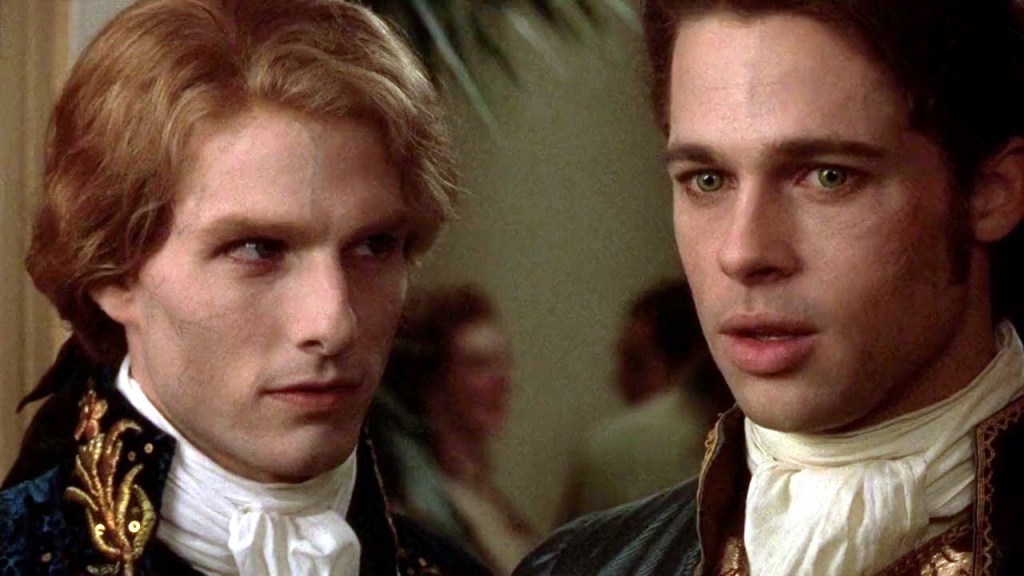
That’s right, the first top 5 list is complete! Naturally, if you know me, this means it had to be my favorite genre of movies. So I have talked about all types of vampire films. From Dusk til Dawn for the blood splattered mayhem, Let Me In for the deep, disturbing story, The Lost Boys for the campy fun time, and 30 Days of Night for true gut wrenching horror. Now, to the top film, a slow build into perfection called Interview with the Vampire.
Interview with the Vampire is the kind of film that works its way under your skin not through shock or spectacle, but through accumulated dread and a kind of melancholy that doesn’t announce itself so much as quietly settle in. It belongs to a very specific category of horror movie, one where the monster isn’t really the point and the violence, when it comes, feels more like punctuation than plot. The real subject is time, and what it does to a person who has too much of it.
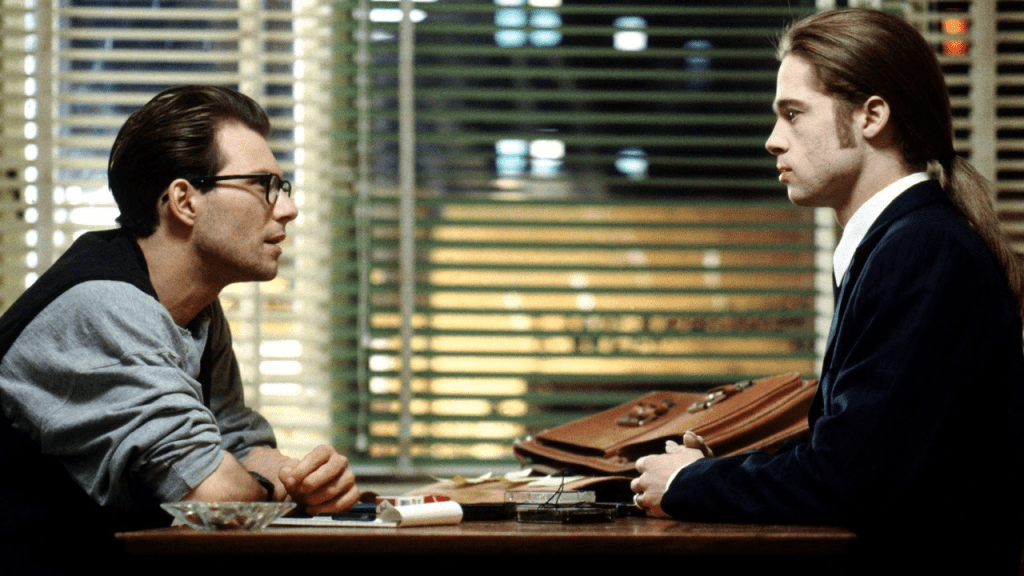
The story is narrated by Louis, played by Brad Pitt, who sits in a dimly lit room recounting his entire existence to a journalist who clearly has no idea what he’s gotten himself into. That framing device isn’t just structural. It establishes a mood of confession that hangs over every scene. Louis isn’t bragging. He isn’t warning anyone. He’s doing something harder and stranger than either of those things. He’s trying to make sense of a life that doesn’t make sense, one that has stretched far beyond any point where it could be called living in any recognizable way.
Rent or buy Interview with the Vampire on Prime Video
Pitt plays him with a stillness that takes some getting used to if you’re expecting something more operatic. Louis rarely raises his voice. He rarely acts with urgency. He exists in a state of perpetual grief that has been running so long it no longer looks like grief from the outside, just a kind of fundamental sadness baked into how he moves and speaks. It’s a genuinely tricky performance because the character’s passivity could easily read as blankness, but Pitt keeps finding these small moments of feeling that remind you something is still alive in there, even if it barely wants to be.
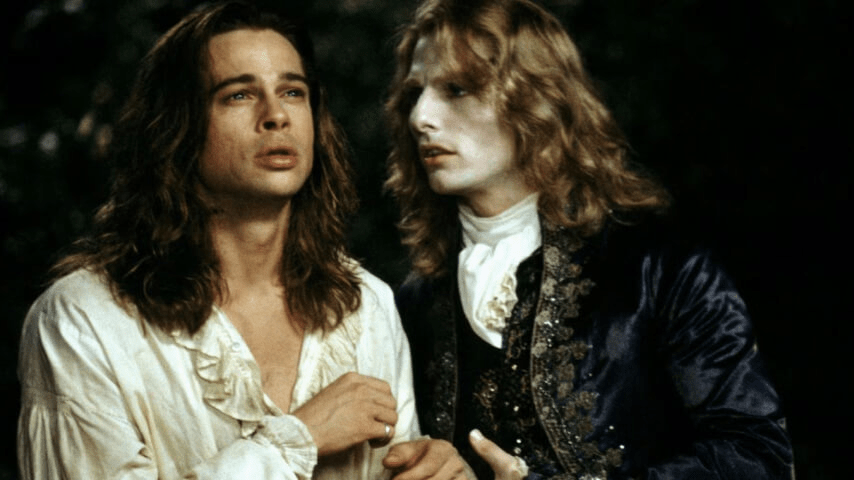
Tom Cruise as Lestat operates at a completely different frequency. Where Louis is weighted down, Lestat floats. He is theatrical, vain, casually cruel, and completely in love with what he is. Cruise plays him with a kind of unnerving delight, like someone who has been given a gift that everyone around him is too small-minded to appreciate. Lestat doesn’t understand Louis’s suffering because he genuinely doesn’t share it. Immortality to him is an inheritance he has fully accepted and intends to enjoy without apology. The two of them together create a tension that the film rides for most of its runtime, and it’s a more interesting tension than the usual monster story offers because neither of them is exactly wrong. They just want completely different things from an existence neither of them chose.
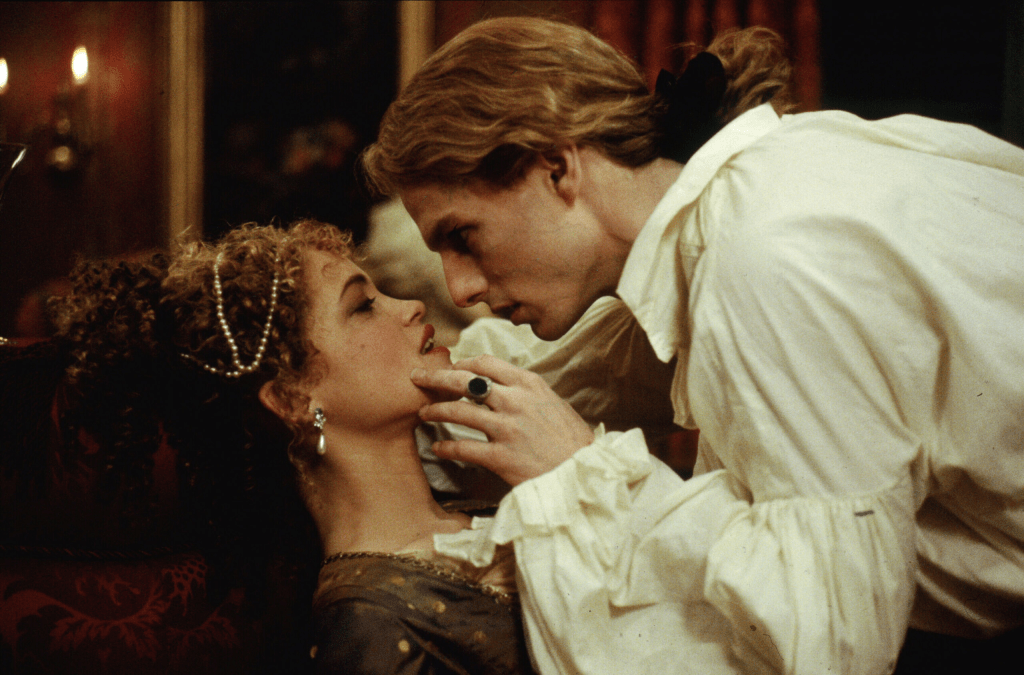
Kirsten Dunst’s Claudia is where the film gets genuinely disturbing in a way that lingers well after it’s over. She’s turned into a vampire as a child, which means she will be physically ten years old for the rest of eternity while her mind continues to grow, sharpen, and eventually rage against the prison of the body she’s trapped in. Dunst was only twelve when this was filmed, and the fact that she pulls off the emotional complexity the role requires is remarkable. There’s a scene where she cuts her hair, watches it grow back instantly, and the way she reacts contains more horror than anything with fangs in the entire movie. She comes to understand her situation fully, which only makes it worse, and the fury she develops toward Lestat for doing this to her gives the second half of the film a sense of mounting inevitability that is almost unbearable to watch.
Buy Interview with the Vampire on DVD or Blu-ray
The relationship between the three of them is almost a dark parody of family. Lestat created Louis. Louis and Lestat created Claudia, in the sense that they turned her. They live together, feed together, and slowly come apart at the seams together. The film is perceptive about how control operates inside that kind of arrangement, how Lestat uses love and dependency as tools, how Louis knows exactly what’s being done to him and mostly lacks the will to resist it, and how Claudia is the only one who eventually decides that awareness without action is its own form of surrender.
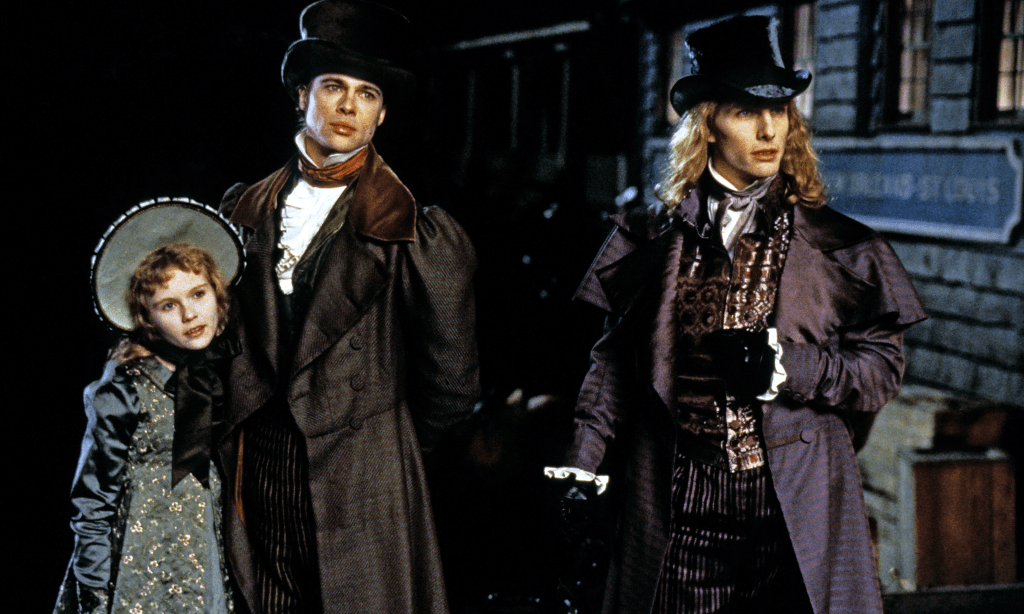
Visually, the film earns its reputation. Cinematographer Philippe Rousselot shoots New Orleans and later Paris with a palette that manages to feel both sumptuous and rotten. There’s an overripe quality to the image, like fruit that’s at peak beauty right before it starts to go. The interiors are packed with candlelight and shadow. The costumes exist in that specific zone where beauty and excess have become indistinguishable from each other. Nothing about the visual design is accidental, and the film is patient enough to let you sit inside its atmosphere rather than just passing through it.
That patience is either the film’s greatest strength or its biggest obstacle depending on what you want from it. This is not a movie that builds toward a cathartic release. There are moments of violence and genuine shock, but they don’t function as payoffs in the traditional sense. The film isn’t building toward an ending so much as a reckoning, a moment where the weight of everything Louis has described finally has nowhere left to go. Whether that lands for you or not probably depends on how willing you are to accept that some stories don’t resolve so much as simply run out of road.
What the film gets exactly right is its refusal to romanticize what it’s depicting. A lot of vampire stories, even dark ones, traffic in a kind of aspirational gloom, the idea that eternal life, even if painful, carries a grandeur that makes the suffering worthwhile. Interview with the Vampire isn’t interested in that trade. Immortality here is just more of everything, more time, more loss, more accumulation of things you can’t put down. Louis doesn’t become wiser or more powerful. He becomes more tired. That’s a bleaker idea than most horror films are willing to commit to, and the fact that this one follows it all the way through is what makes it stick.

 Welcome to Duane's World Rocks
Leave a comment