

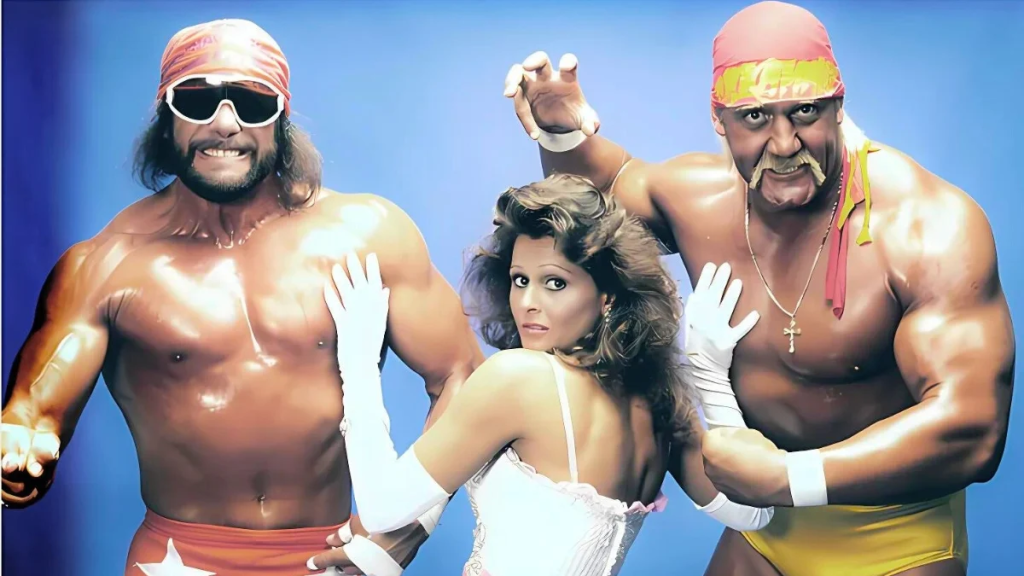
I was just a kid watching cartoons on a Saturday morning at my grandparents house, say, in 1986. It was raining so we couldn’t go work out in the yard, so I flipped through the channels. Even with cable, there were only about 25, so it didn’t take long. I ran across something I’d never really watched before. Sure, I knew about wrestling, but for the first time I saw an interview with Hulk Hogan, then Macho Man picked Elizabeth as his manager. A little later I saw Macho wrestle some jabroni, and later King Kong Bundy got to beat up another ham-and-egger (Thanks for that one Bobby Heenan!) I saw Freddie Blassie calling us all a bunch of pencil-neck geeks, and Rowdy Roddy Piper being a complete smartass coward on Piper’s Pit. Now sure, all of these probably weren’t the same show. It was 40 years ago after all, so my memory is a little off, but they all happened and I watched them all as my obsession with wrestling grew.
In the coming months, I found the NWA, UWF, Continental, World Class, AWA, and all the other late 80’s cable TV wrestling gems. The golden era of professional wrestling produced some of the most iconic figures in sports entertainment history. Here are the five who stood above the rest.
#1 Hulk Hogan
The face of an era. No single figure did more to put professional wrestling on the cultural map than Hulk Hogan.
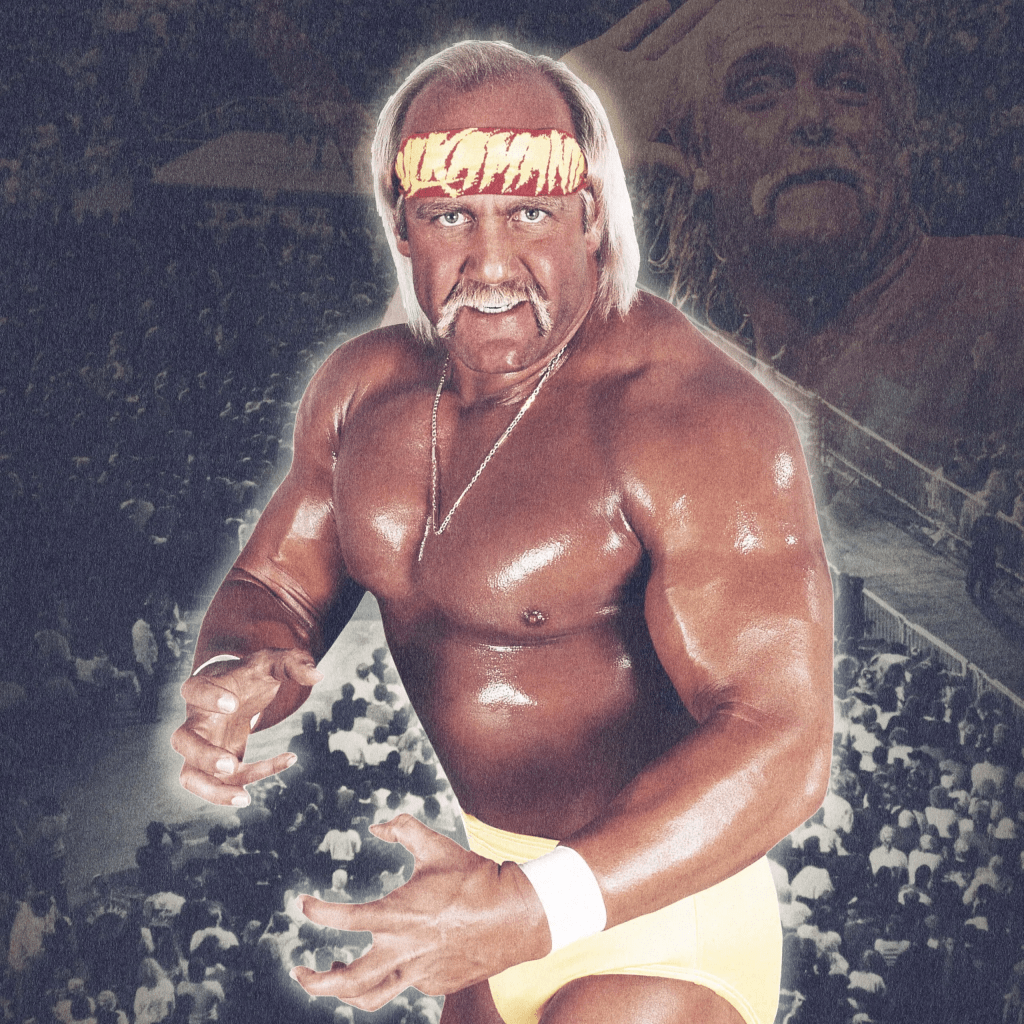
There is no conversation about 1980s professional wrestling that does not begin and end with Hulk Hogan. He was the undisputed center of the WWF’s explosive rise during the decade, the figure around whom Vince McMahon built a national and then international empire. Before Hogan, wrestling was a regional product. After him, it was a mainstream phenomenon. WrestleMania itself was born from the belief that Hogan could sell arenas and pay-per-views on name recognition alone, and he proved that belief correct over and over again.
What made Hogan so effective was not technical mastery in the ring but something rarer and harder to manufacture: an almost supernatural ability to connect with a crowd. The ritual of hulking up, tearing the shirt, pointing at the opponent, dropping the leg. These were not moves so much as a shared ceremony between performer and audience. Every child in every arena knew the sequence by heart and screamed for it anyway. That kind of connection between a performer and a crowd is extraordinarily rare, and in the 1980s nobody had it like Hulk Hogan.
#2 Sting
The heart and soul of the NWA and WCW. Sting was the rare performer who never needed to leave home to become a legend.
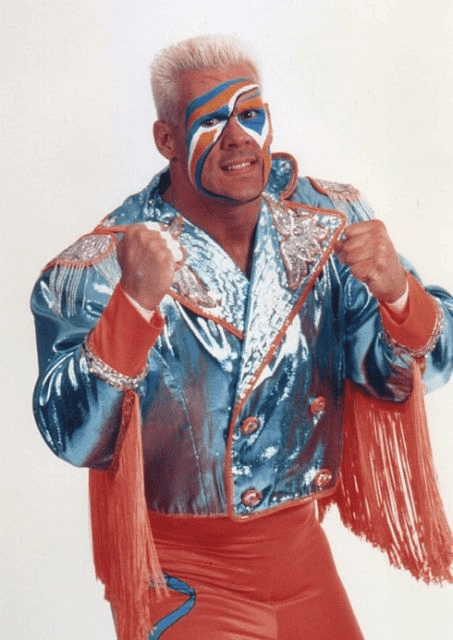
While the WWF had Hogan, the National Wrestling Alliance had Sting, and the case can be made that Sting was the more complete performer. Breaking onto the scene in the mid-1980s as part of the tag team known as the Blade Runners and then as a singles competitor, Sting quickly established himself as one of the most naturally charismatic performers in the business. The face paint, the intensity, the physicality, everything about his presentation felt authentic in a way that was impossible to fake. Crowds responded to him immediately and never stopped.
What separated Sting from many of his contemporaries was his versatility. He could work as a high-energy babyface, a brooding antihero, or a thunderous powerhouse depending on what a feud required, and he was convincing in every mode. His rivalry with Ric Flair in the late 1980s produced some of the finest matches of the decade and established Sting as a main event talent who could carry the top of a card entirely on his own. He was also, by all accounts, one of the genuinely good people in a business that was not always kind, and that reputation only added to the loyalty his fans felt toward him.
#3Randy “Macho Man” Savage
The most electric performer of the decade. Every time Randy Savage walked through a curtain, something memorable was about to happen.
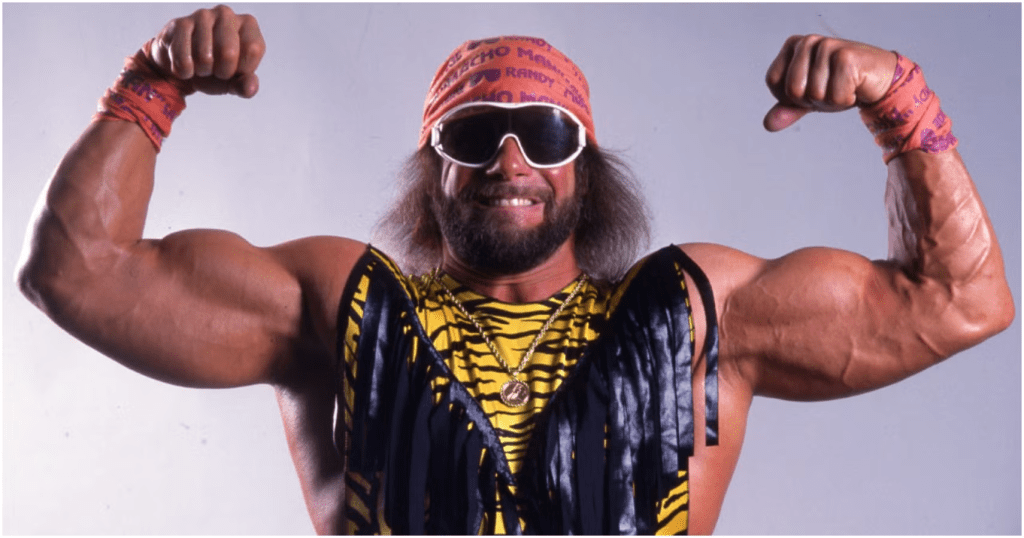
Randy Savage operated at a frequency that nobody else in professional wrestling has ever quite matched. The intensity, the ring work, the promos, the outfits, the voice was dialed up to a level just past normal human range, and somehow it never felt like too much. It always felt exactly right. His promos were stream-of-consciousness masterpieces, rambling and unpredictable and somehow always landing exactly where they needed to. His in-ring work was ahead of its time, technically crisp and physically committed in a way that made every match feel genuinely important.
His WWF Championship reign beginning at WrestleMania IV stands as one of the most satisfying title victories of the era, and his matches against Ricky Steamboat and Hulk Hogan rank among the finest the promotion produced during the 1980s. The combination of his ring work and his extraordinary gift for storytelling made him the complete package in a way that few performers before or since have managed. Decades after his peak, the phrase “Oh yeah!” still lands with the same jolt it always did.
#4Jake “The Snake” Roberts
The most psychologically compelling performer of the decade, and perhaps in the history of the business.
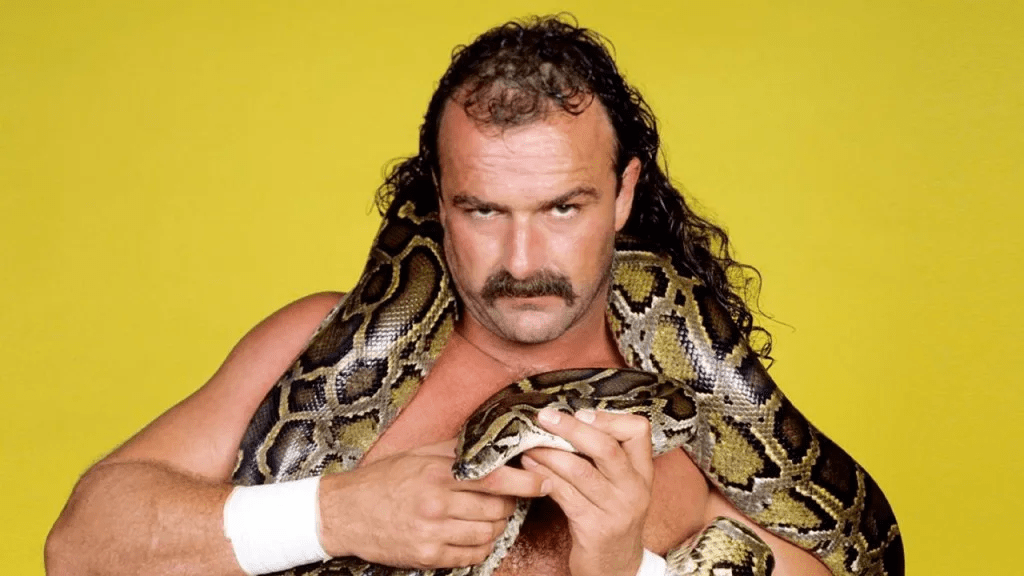
In an era defined by larger-than-life characters and thunderous crowd reactions, Jake Roberts carved out a completely different kind of space. He was quieter. Slower. More deliberate. Where others worked at full volume, Jake operated in something closer to a whisper, and that made him far more unsettling than anything the WWF was doing at the time. His promos were genuinely menacing in a way that transcended the conventions of professional wrestling, leaning into a kind of psychological dread that felt more like a thriller than a sporting spectacle. He understood instinctively that what you suggest is always scarier than what you show.
His DDT was one of the most protected finishers of the decade, treated with a seriousness that made it feel genuinely dangerous every time it was hit. His use of Damien, the python he carried to the ring, was a masterclass in character work, a prop that doubled as a psychological weapon and kept opponents and audiences permanently off-balance. Jake Roberts proved that professional wrestling could accommodate genuine darkness, and the performers who followed in his footsteps owe him more than most of them have acknowledged.
#5 Ricky “The Dragon” Steamboat
The purest in-ring performer of the golden era. When the history of professional wrestling is written, Ricky Steamboat’s name belongs near the very top.
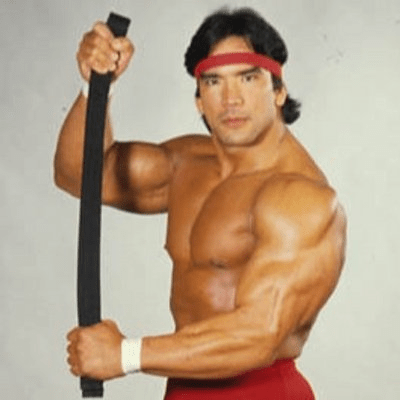
If the other four names on this list represent professional wrestling’s gifts to popular culture, Ricky Steamboat represents the art form at its most refined. He was, by nearly universal consensus among those who worked with and watched him, the finest pure wrestler of his generation. His matches had a fluidity and a logic that made them feel real in a way that was genuinely rare, each sequence building on the last with the kind of internal consistency that elevated the entire craft. He made his opponents look good, made himself look great, and made the audience believe completely in everything happening inside the ropes.
His match against Randy Savage at WrestleMania III in 1987 is routinely cited as one of the greatest matches in the history of the event and remains a blueprint for how a professional wrestling match should be constructed and executed. His work in the NWA alongside Ric Flair produced an equally legendary series of bouts that showcased his range and his extraordinary physical gifts. Steamboat never had the cultural footprint of a Hogan or the character mystique of a Jake Roberts, but inside the ring, he was as good as it has ever gotten.
This has been my 5 favorite wrestlers of the 1980’s. Coming soon, you’ll get my top 5 from the 1990’s, and just to stress, don’t be surprised to see a repeat of one. Have a great week everyone!

 Welcome to Duane's World Rocks
Leave a comment